
HOW LONG DOES RENDERING LAST IN MELBOURNE? 2026 COMPLETE GUIDE
INTRODUCTION
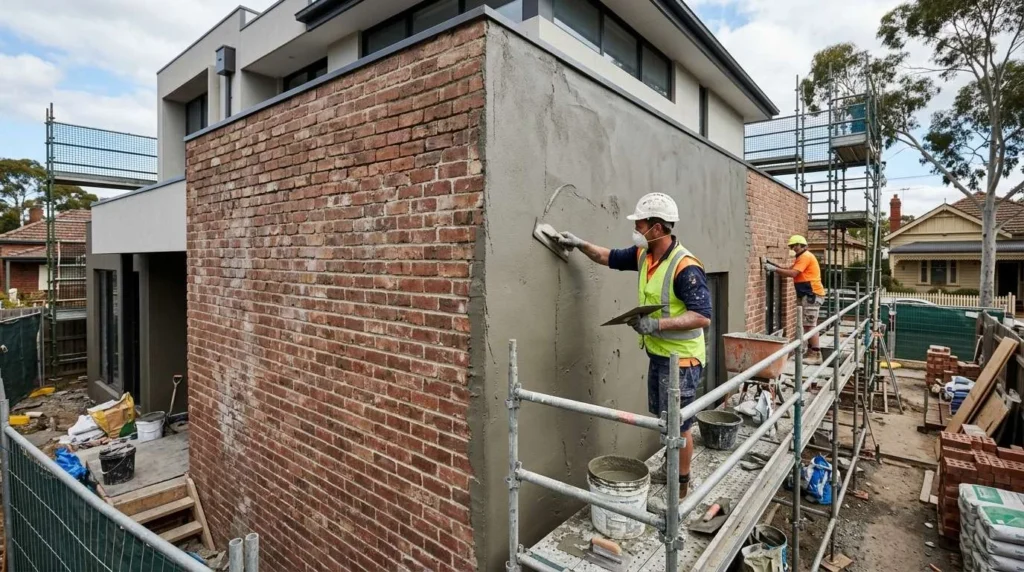
If you are searching for how long rendering lasts in Melbourne, the answer is not the same for every home. Instead, it depends on several important factors that affect durability over time.
In most cases, a professionally applied render lasts between 20 and 40 years. However, this lifespan can change depending on weather exposure, installation quality, and how well the surface was prepared before application.
For example, some homes in Melbourne stay in excellent condition for decades. On the other hand, some properties begin to show damage within just a few years, usually because of poor workmanship or missing preparation steps.
At Emerald Group VIC, we specialise in house rendering Melbourne and facade restoration across western and northern suburbs. Over the years, we have seen both long-lasting finishes and early failures, which clearly shows how important proper installation really is.
QUICK ANSWER
Rendering in Melbourne typically lasts between 20 and 40 years.
However, the actual lifespan depends on:
- material type
- installation quality
- weather exposure
- maintenance level
In general, acrylic and polymer renders last longer because they are flexible and can handle movement in buildings. Meanwhile, cement render may crack earlier, especially in areas with strong temperature changes.
HOW LONG DOES RENDERING LAST IN MELBOURNE?
Different rendering systems perform differently over time, so the lifespan can vary.
- Cement render: 20–30 years
- Acrylic render: 25–35 years
- Solid plaster systems: 20–40 years
- Polymer render systems: 30+ years
Acrylic render is now widely used across Melbourne because it adjusts better to building movement. As a result, it reduces cracking and increases durability.
MELBOURNE WEATHER IMPACT ON RENDER
Acrylic render is now widely used across Melbourne because it adjusts better to building movement. As a result, it reduces cracking and increases durability.
MELBOURNE WEATHER IMPACT ON RENDER
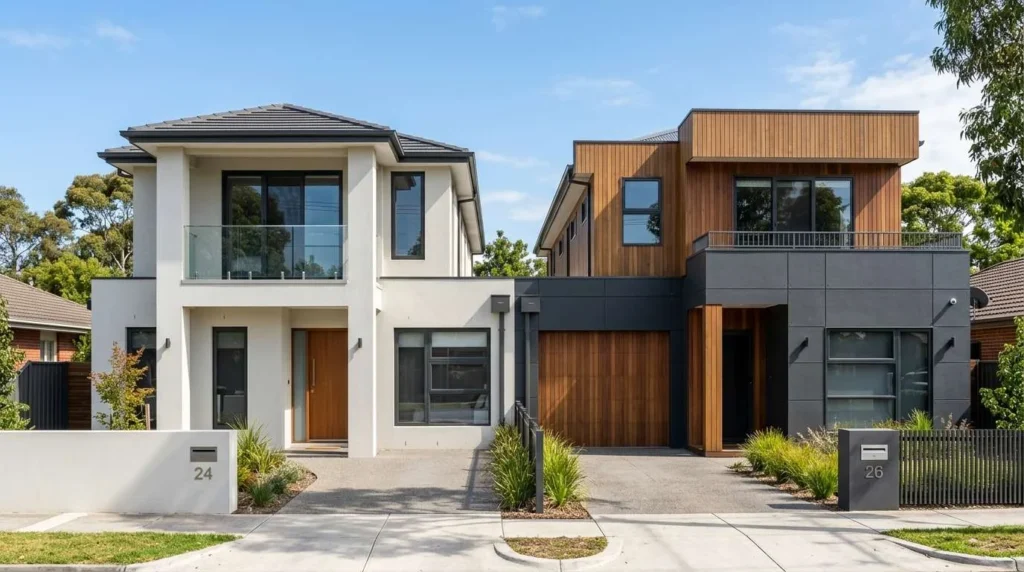
Melbourne has one of the most unpredictable climates in Australia. Because of this, exterior surfaces are constantly exposed to changing conditions.
Homes regularly experience:
- hot summer heat
- sudden cold fronts
- heavy rainfall
- high humidity
- strong UV rays
- coastal winds As a result, walls expand and contract repeatedly. Over time, this movement can lead to:
- hairline cracks
- moisture penetration
- paint fading
- surface separation
FACTORS THAT AFFECT RENDER LIFESPAN
1. Installation Quality (MOST IMPORTANT)
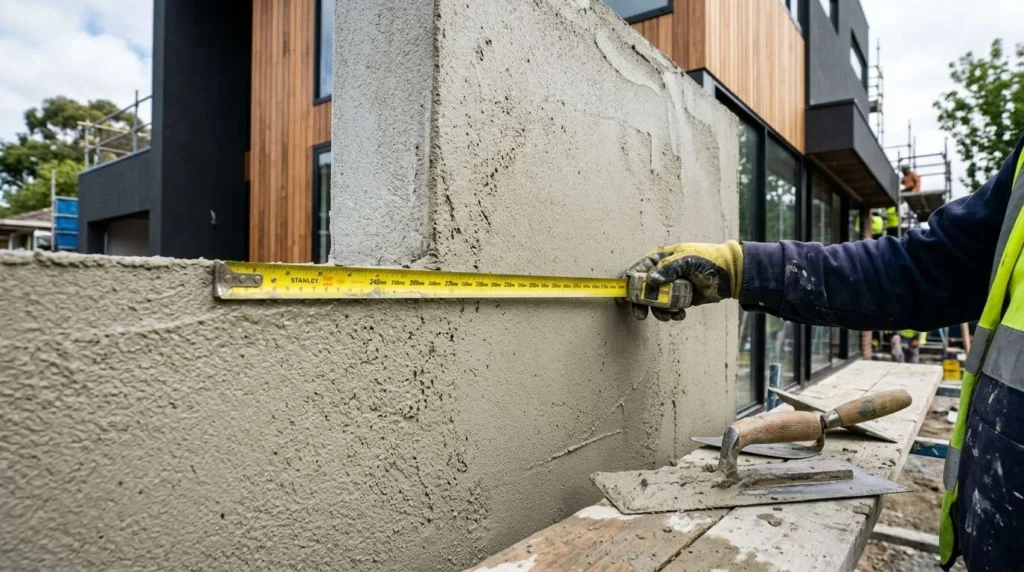
The most important factor is how well the render is installed.
In many cases, early failure happens because:
- dust or dirt is left on the wall
- primer is not applied properly
- materials are mixed incorrectly
- the application is rushed
- curing time is ignored
Because of this, even high-quality materials can fail early if the workmanship is poor.
2. Wall Condition Before Rendering
Before rendering begins, the wall must be properly prepared.
Often, older brickwork contains hidden issues such as:
- moisture problems
- structural cracks
- salt contamination
- weak mortar joints
If these problems are ignored, they will affect the final result and reduce lifespan.
Recommended service: Wall Resurfacing Melbourne
3. Material Choice
Material selection also plays a major role.
Cement Render
- strong and affordable
- however, it is rigid
- therefore, it may crack more easily
Acrylic Render
- flexible and modern
- handles movement better
- reduces cracking
Polymer Systems
- highest durability
- best performance in harsh conditions
- longest lifespan
4. Exposure Level
In addition, exposure level also affects durability.
Homes in coastal areas, open streets, or high-wind locations usually wear out faster. This happens because they are constantly exposed to environmental stress.
CEMENT VS ACRYLIC RENDER
-
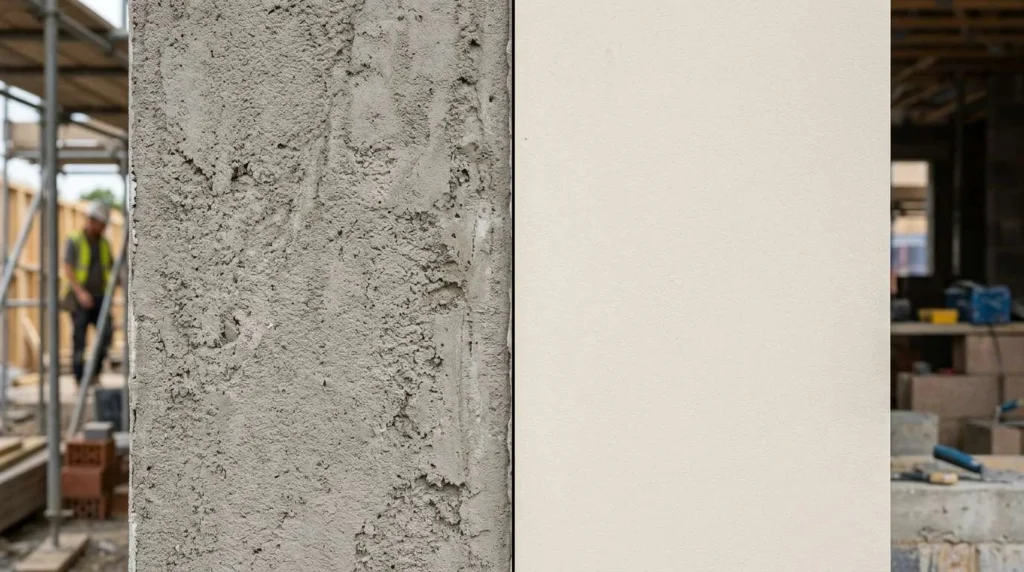
Feature Cement Render Acrylic Render Flexibility Low High Crack Resistance Low High Cost Lower Higher Lifespan 20–30 years 25–35+ years Maintenance High Low Finish Traditional Modern Acrylic render is now the preferred choice for modern facade rendering Melbourne projects because it performs better in changing weather conditions.
WHY RENDER FAILS EARLY
Render usually fails due to specific issues rather than age alone.
One common reason is moisture. When water gets trapped behind the surface, it expands and creates pressure, which leads to separation.
Another reason is natural building movement. Since buildings shift slightly over time, rigid materials often struggle to handle this movement.
In other cases, low-quality materials may break down faster under UV exposure. Finally, if maintenance is ignored, the surface gradually weakens.
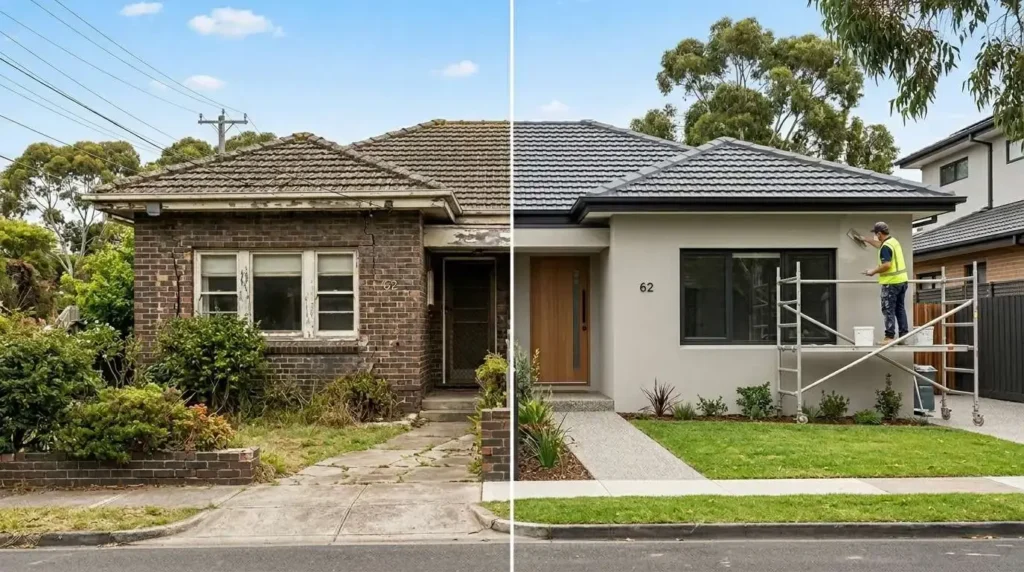
SIGNS YOUR RENDER IS FAILING
You should watch for early warning signs, such as:
- cracks spreading across the surface
- bubbling or blistering areas
- damp patches on walls
- peeling paint
- hollow sound when tapped
- loose or separating sections
If these signs appear early, repairs are usually more affordable and effective.
RENDER COST IN MELBOURNE (2026 GUIDE)
| Service | Cost |
|---|---|
| Cement Render | $45–$80/m² |
| Acrylic Render | $60–$110/m² |
| Render Repairs | From $250+ |
Additional costs may include scaffolding, surface preparation, crack repairs, or old coating removal.
MAINTENANCE GUIDE
Regular maintenance can significantly extend render lifespan.
Every 2–3 years:
- inspect for cracks
- clean exterior walls
- check for moisture signs
Every 5–10 years:
- repaint surfaces
- seal minor cracks
- inspect joints
Because of this simple routine, render can last much longer than expected.
REPAIR VS RENDERING
Sometimes only small repairs are needed.
Repair is suitable when:
- cracks are minor
- damage is localised
- structure is stable
However, re-rendering is required when:
- cracks are structural
- damage is widespread
- moisture has entered the wall
- repeated repairs have failed
REAL MELBOURNE CASE STUDIES
Deanside Project
Acrylic render upgrade with full crack repairs.
Result: Improved street appeal and property value
Caroline Springs Restoration
Cement render repair with moisture treatment and protective coating.
Result: Fully restored durable exterior finish
SUBURBS WE SERVICE
Deanside, Caroline Springs, Tarneit, Point Cook, Werribee, Sunshine, Footscray, Essendon, Brunswick, Truganina
EEAT TRUST SIGNALS
Written by: Emerald Group VIC Rendering Team
Experience: 10+ years in Melbourne rendering industry
- Licensed professionals
- Fully insured workmanship
- Real project experience
- Residential and commercial expertise
- Strong local Melbourne knowledge
Frequently Asked Questions
How long does exterior render last?
Typically 20–40 years depending on material and maintenance.
What is the best render for Melbourne weather?
Acrylic or polymer systems because they are flexible.
Why does render crack in Melbourne?
Because of temperature changes and building movement.
Can damaged render be repaired?
Yes, most cracks can be repaired without full replacement.