
Acrylic Rendering Melbourne
INTRODUCTION
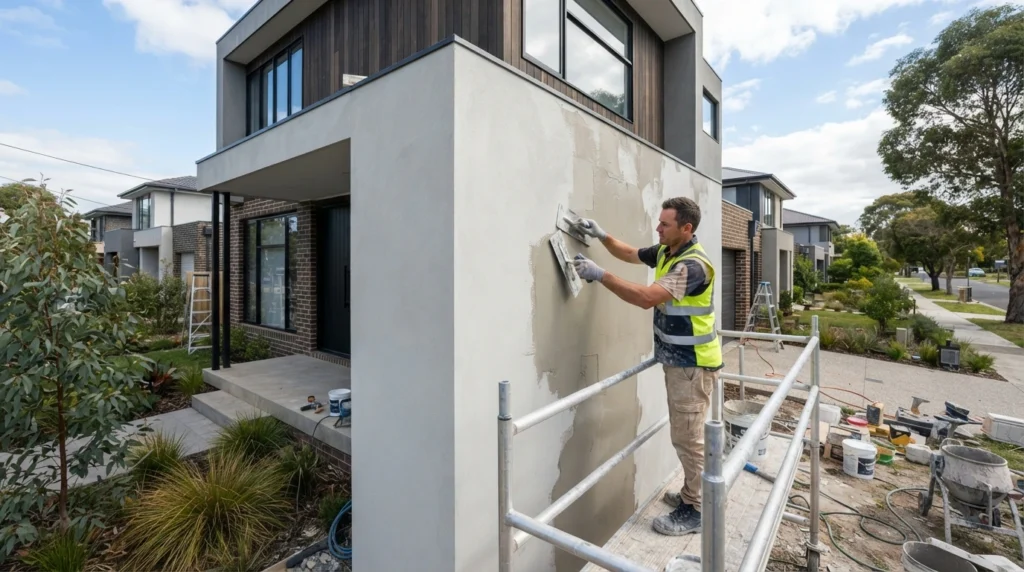
If the exterior of your property looks tired, uneven or dated, acrylic rendering can be an effective way to give the walls a cleaner and more modern appearance. It can also provide a practical protective finish when the correct product and preparation system are used for the building.
At Emerald Group VIC, we provide professional acrylic rendering in Melbourne for residential properties, commercial buildings, renovations and selected restoration projects. Rather than applying the same finish to every wall, we consider the existing surface, its condition, previous coatings, visible cracking, moisture and the finish you want to achieve.
Acrylic render is available in a range of textures and colours, making it suitable for both contemporary homes and renovation projects. However, choosing the right product is only part of the job. Proper surface preparation and application are just as important to the final result.
If you are considering acrylic rendering for your Melbourne property, understanding how the system works, what it can be used for and what affects the cost can help you make a better decision.
What Is Acrylic Rendering?
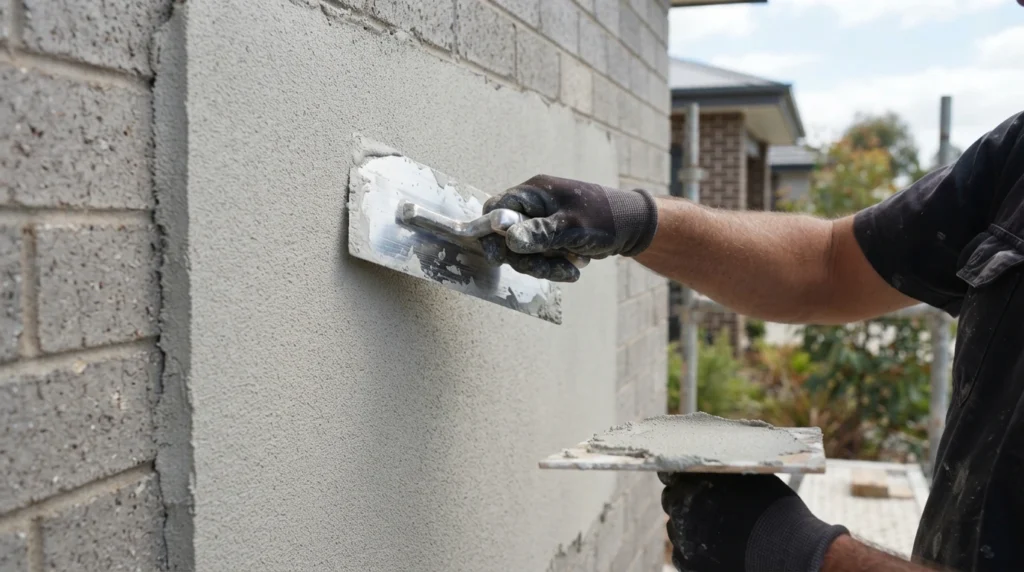
Acrylic rendering is a wall finishing system that incorporates acrylic polymers into the render or coating. These polymers can provide greater flexibility and adhesion compared with some traditional rigid cement-based finishes.
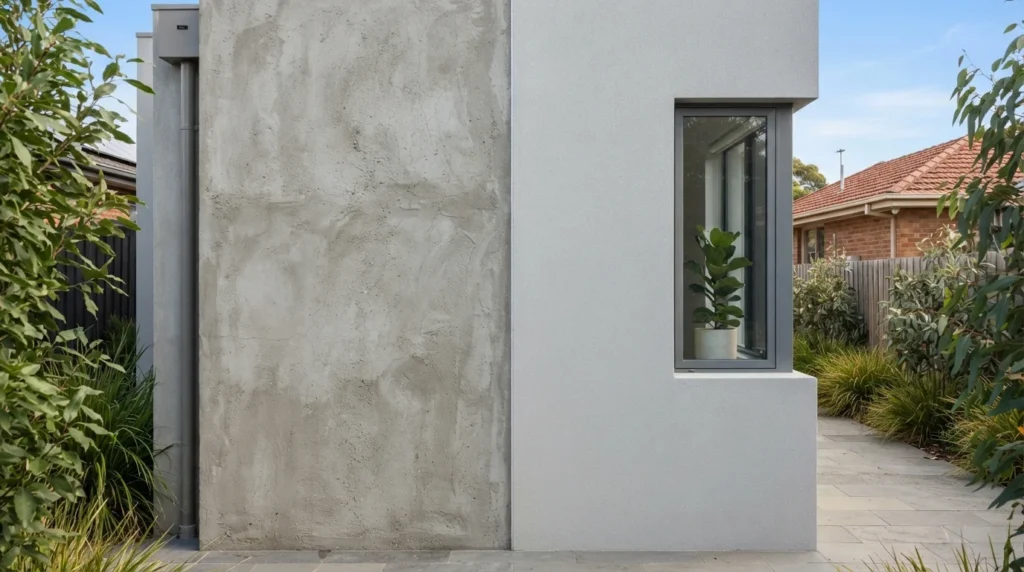
Depending on the product and specification, acrylic render can provide a smooth, fine or textured exterior finish. Some systems are available in a wide range of colours, which means the final surface may not require a separate paint finish.
Acrylic rendering can be used on suitable prepared surfaces including masonry and other approved substrates. The correct preparation depends on the condition and type of the existing wall.
This is important because acrylic render is not simply a material that can be applied over every existing surface. The substrate needs to be suitable, sound and properly prepared.
Why Choose Acrylic Rendering in Melbourne?
Melbourne properties experience changing conditions throughout the year. Hot periods, cool temperatures, rain and exposure to sunlight can all affect exterior walls and coatings.
For property owners looking for an updated exterior, acrylic rendering can provide a combination of appearance and practical performance.
It may be suitable when you want to:
- Refresh an ageing exterior
- Give a brick or masonry wall a rendered appearance
- Create a modern textured finish
- Add colour without relying solely on traditional paint
- Improve the visual consistency of repaired walls
- Update a property during a renovation
- Finish a suitable new building surface
The performance of any render system depends on the substrate, product specification, preparation and installation. A quality finish begins before the render is applied.
Benefits of Acrylic Rendering
Flexible Finish
Acrylic-based systems are generally more flexible than traditional rigid render finishes. This can help accommodate some normal movement in the substrate.
However, no rendering system should be described as completely crack-proof. Significant or recurring cracking should always be assessed before a new finish is applied.
Wide Choice of Colours and Textures
One of the main attractions of acrylic rendering is the range of decorative options.
Depending on the selected system, you can choose different:
- Colours
- Textures
- Grain sizes
- Surface appearances
- Feature finishes
This makes acrylic render suitable for both simple exterior updates and more customised architectural designs.
Modern Appearance
Acrylic render can give older brick or uneven exterior surfaces a cleaner appearance. A well-prepared wall with a consistent finish can significantly change the overall look of a property.
Weather Exposure
Exterior acrylic systems are designed for use in outdoor environments and can provide a protective finish when correctly specified and applied.
The actual performance depends on the particular product, substrate and site conditions, so product requirements should always be followed.
Low Ongoing Maintenance
A properly completed exterior finish generally requires less maintenance than an ageing or deteriorating wall surface.
Routine inspection and appropriate cleaning can help maintain the appearance of the finished surface.
Suitable for Renovation Projects
Acrylic rendering can be particularly useful when updating an older property without completely rebuilding its exterior walls.
It can help create a more contemporary appearance while allowing other renovation work to remain focused on the existing structure.
Acrylic Rendering vs Cement Rendering
Acrylic and cement rendering are both used for exterior and interior applications, but they have different characteristics.
| Feature | Acrylic Rendering | Cement Rendering |
|---|---|---|
| Flexibility | Generally more flexible | More rigid |
| Finish options | Wide range of textures and colours | Traditional range of finishes |
| Colour | Many systems offer coloured finishes | Often painted after curing |
| Application | Suitable for various prepared surfaces | Commonly used on masonry |
| Curing requirements | Depends on product system | Requires appropriate curing |
| Crack tolerance | Better able to accommodate some movement | More susceptible to cracking from movement |
| Best application | Depends on substrate and desired finish | Depends on substrate and project |
There is no universal winner.
For some properties, cement rendering may be the more appropriate choice. For others, acrylic rendering may provide the flexibility, texture and appearance the owner wants.
The condition of the wall should be assessed before choosing between the two.
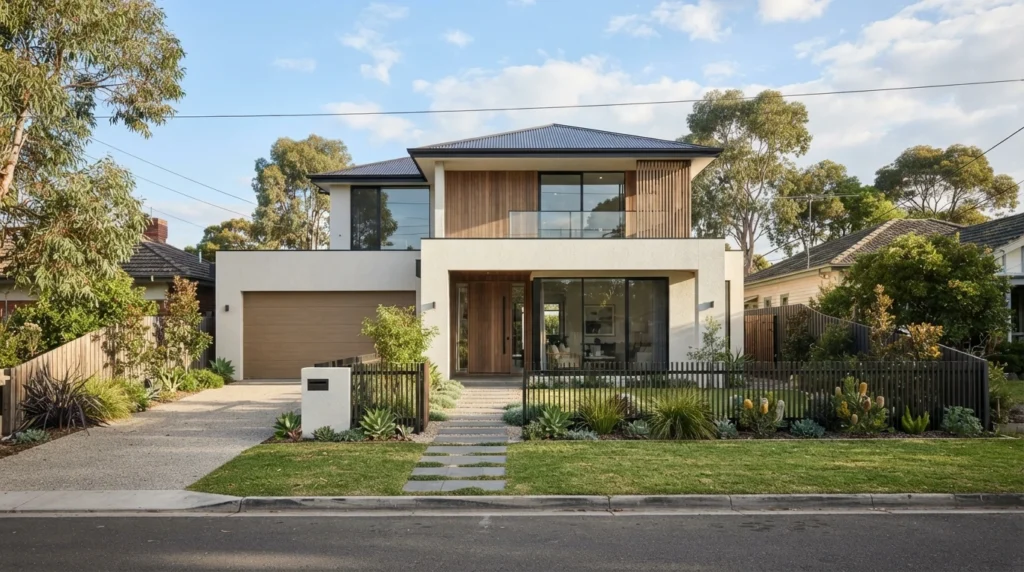
Where Can Acrylic Render Be Used?
Acrylic render has a range of potential applications when the substrate is suitable.
Exterior Walls
It can be used to update the appearance of residential and commercial exterior walls.
Renovated Brick Homes
Older brick homes can sometimes be given a completely different appearance through a professionally prepared rendered finish.
Feature Walls
Acrylic textures and colours can be used to create feature areas around entrances, extensions or selected sections of a façade.
Commercial Facades
Commercial properties can use rendered finishes to create a cleaner and more contemporary appearance.
Boundary Walls
Suitable masonry boundary walls can also be rendered when the substrate and surrounding conditions allow.
Renovations and Extensions
Acrylic rendering can help create a consistent appearance between existing sections and newly constructed areas.
The suitability of the system should always be confirmed based on the actual substrate and project requirements.
Acrylic Rendering Process
Every property is different, but a professional acrylic rendering project generally involves several stages.
1. Initial Assessment
The wall is inspected to identify the substrate, existing coating, visible damage and preparation requirements.
2. Surface Preparation
The surface is cleaned and prepared. Loose or damaged material is addressed before the new system is installed.
3. Crack and Surface Repairs
Where required, cracks, holes and damaged areas are repaired using methods suitable for the substrate and specified system.
4. Primer or Base Preparation
The appropriate primer, base coat or bonding preparation is applied according to the selected product system.
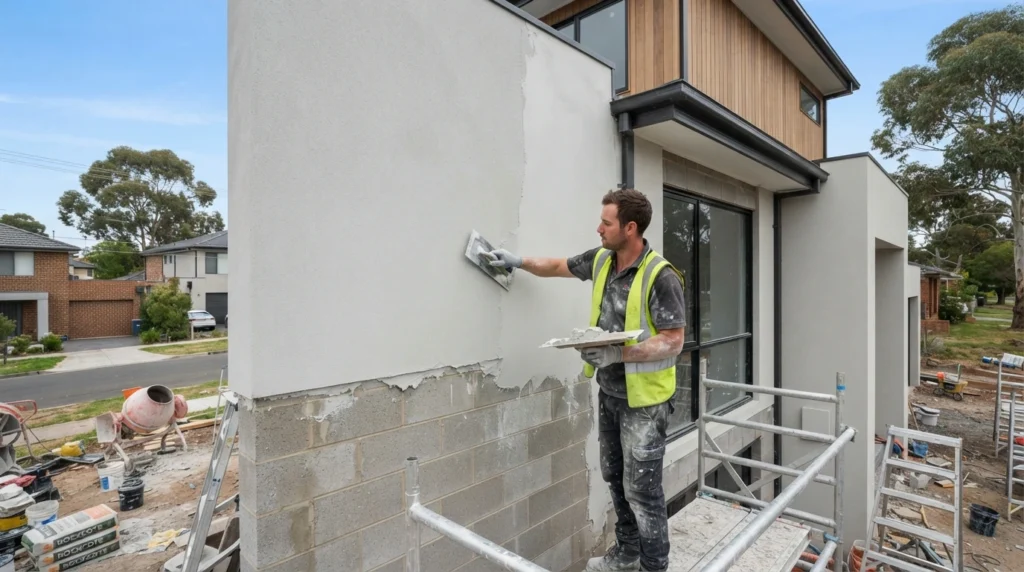
5. Acrylic Render Application
The acrylic render is applied evenly across the prepared surface.
Application technique is important because inconsistent thickness or poor handling can affect the appearance of the completed wall.
6. Texture and Finish
The selected texture is worked into the surface to create the required appearance.
7. Final Inspection
The finished wall is inspected for consistency, edges, texture and visible defects.
The exact process can vary according to the product, substrate, property and project requirements.
Frequently Asked Questions
Is acrylic render suitable for Melbourne homes?
Acrylic render can be suitable for many Melbourne homes when the correct product is selected and the substrate is properly prepared.
Is acrylic render better than cement render?
Not in every situation. Acrylic and cement render have different properties, and the best option depends on the substrate, exposure, design and project requirements
Does acrylic render prevent cracking?
It can provide greater flexibility than some rigid finishes, but it does not make a wall completely crack-proof. Existing movement and structural issues need to be addressed separately.
Can acrylic render go over brick?
Acrylic render can be applied to suitable prepared masonry surfaces. The wall should be assessed and prepared correctly before application.